Annapurna Base Camp and Poon Hill Hike: Complete Trek Guide
- soleencounters
Namaste and warm greetings from Nepal. If you are searching for a Himalayan hike that blends classic mountain scenery, rich local culture, comfortable teahouse stays, and a well paced route, the Annapurna Base Camp and Ghorepani Poon Hill Trek is one of the finest choices in the country. This journey combines two iconic trails into one rewarding experience, making it ideal for trekkers who want both panoramic sunrise views and a true high mountain base camp adventure.
Table of Contents
Operated by Sole Encounters Adventures, this trek is designed for travelers who value safety, authenticity, and local expertise. From forested hills to glacier valleys, from village life to towering Himalayan walls, this hike offers a complete picture of trekking in Nepal.
Why Choose the Annapurna Base Camp and Ghorepani Poon Hill Trek
This trek stands out because it offers diversity without extreme technical difficulty. In one journey, you experience:
-
Famous sunrise views from Poon Hill
-
Traditional Gurung and Magar villages
-
Dense rhododendron and bamboo forests
-
Deep river gorges and suspension bridges
-
The dramatic Annapurna Sanctuary
-
A close up encounter with the world’s tenth highest mountain
The route is well established, the teahouse infrastructure is excellent, and the scenery changes almost every day. For first time trekkers in Nepal as well as experienced hikers looking for a balanced Himalayan adventure, this combination trek delivers exceptional value.
Overview of the Hiking Route
The Annapurna Base Camp and Ghorepani Poon Hill hike is located in central Nepal within the protected Annapurna Conservation Area. The trek usually starts with a scenic drive from Pokhara to Nayapul or a nearby trailhead.
From there, the trail gradually ascends through villages, terraced farmland, and forests before reaching Ghorepani. After the iconic sunrise hike to Poon Hill, the route descends and then turns toward the Modi Khola valley, leading trekkers into the heart of the Annapurna Sanctuary and onward to Annapurna Base Camp at 4,130 meters.
Ghorepani and Poon Hill Sunrise Experience
Hiking to Ghorepani
Ghorepani sits at around 2,860 meters and is surrounded by thick rhododendron forests. The hike to this village involves stone staircases, forest trails, and scenic ridgelines. During spring, the hills bloom with red, pink, and white rhododendrons, creating one of the most colorful walking days of the trek.
Teahouses in Ghorepani are comfortable and welcoming, offering hot meals and cozy dining rooms. This is an important acclimatization point and a highlight of the lower section of the trek.
Poon Hill Sunrise Viewpoint
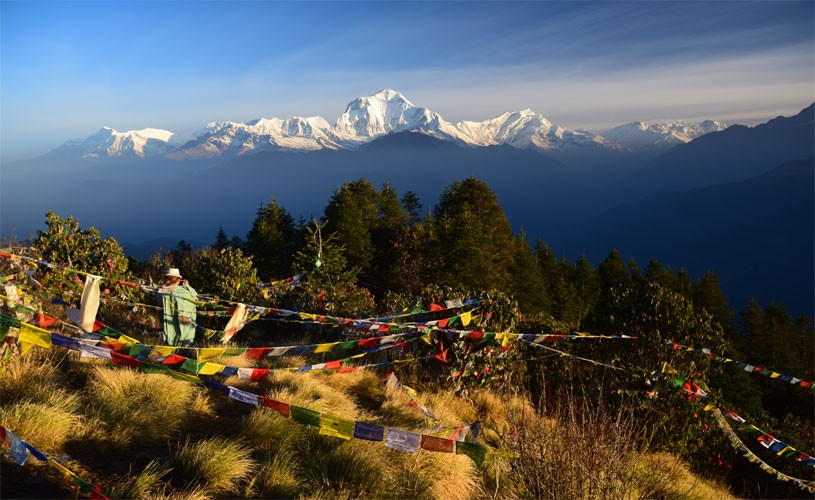
An early morning hike of about one hour brings you to Ghorepani Poon Hill, located at 3,210 meters. As the sun rises, the Himalayan skyline slowly lights up, revealing Annapurna South, Dhaulagiri, Machhapuchhre, and several other snow covered peaks.
The Poon Hill sunrise is famous for a reason. The golden light, the clear mountain silhouettes, and the sense of achievement make this one of the most photographed viewpoints in Nepal. For many trekkers, this moment alone is worth the journey.
Entering the Annapurna Sanctuary
After Poon Hill, the trail descends through forests and villages before turning toward the Modi Khola valley. This transition marks a shift in landscape. The air becomes cooler, the mountains appear closer, and the terrain grows more alpine.
As you hike deeper into the sanctuary, you pass bamboo forests, avalanche paths, and dramatic rock walls. The sense of scale increases each day, and the trail feels more remote despite the presence of teahouses.
Annapurna Base Camp Hike Experience
Machhapuchhre Base Camp
Before reaching Annapurna Base Camp, trekkers usually spend a night at Machhapuchhre Base Camp at around 3,700 meters. This wide open valley is surrounded by steep peaks and glaciers. Machhapuchhre, also known as Fishtail Mountain, dominates the skyline with its sacred unclimbed summit.
This overnight stop helps with acclimatization and prepares the body for the final ascent to base camp.
Reaching Annapurna Base Camp
The hike to Annapurna Base Camp is relatively short but incredibly scenic. The trail gently climbs across glacial moraine and open terrain until you reach the flat basin of base camp.
Standing at Annapurna Base Camp is a powerful experience. Annapurna I rises directly in front of you, while other peaks form a near complete circle around the sanctuary. The feeling of being surrounded by giants is unforgettable and often described as spiritual.
Sunrise and sunset at base camp offer changing colors on the mountains, from soft pink hues to deep orange tones. Many trekkers consider this one of the most beautiful high altitude camps in the Himalayas.
Culture and Village Life Along the Trail
One of the strongest aspects of this trek is the cultural connection. The lower sections of the trail pass through Gurung and Magar villages where traditional stone houses, prayer flags, and terraced fields define daily life.
Locals are friendly and accustomed to trekkers, often greeting visitors with warm smiles and simple hospitality. Staying in teahouses allows you to interact with families, learn about mountain life, and enjoy home cooked meals.
This cultural immersion adds depth to the hiking experience and helps travelers understand Nepal beyond the mountains.
Flora and Fauna of the Annapurna Region
The Annapurna Conservation Area is one of the most biologically diverse regions in Nepal. As you hike through different elevation zones, you will notice dramatic changes in vegetation.
Lower elevations feature rice terraces, banana plants, and subtropical forests. Mid elevations are dominated by oak, pine, and rhododendron trees. Higher up, the landscape becomes alpine with shrubs, grasses, and exposed rock.
Wildlife sightings may include langur monkeys, Himalayan thar, colorful birds, and if you are lucky, glimpses of more elusive species. The natural diversity makes every day of hiking visually interesting.
Difficulty Level and Fitness Requirements
The Annapurna Base Camp and Ghorepani Poon Hill Trek is considered moderate in difficulty. It does not require technical climbing skills, but it does involve long walking days, stone staircases, and gradual altitude gain.
A reasonable level of fitness is recommended. Regular walking, hiking, or cardio training before the trip will significantly improve your experience. Proper acclimatization and a steady pace help reduce altitude related discomfort.
With a well planned itinerary and experienced guides, most healthy travelers can successfully complete this trek.
Best Time to Hike Annapurna Base Camp and Poon Hill
Spring Season
Spring, from Feb to May, is one of the best times for this trek. The weather is stable, temperatures are mild, and rhododendrons are in full bloom. Mountain views are generally clear in the mornings.
Autumn Season
Autumn, from September to December, is the most popular trekking season. Skies are clear, visibility is excellent, and the air feels crisp. This season offers the best overall mountain views.
Winter and Monsoon Considerations
Winter trekking is possible but colder, especially at higher elevations. Monsoon season brings rain and clouds, but fewer crowds and lush green landscapes. With proper planning, both seasons can still offer rewarding experiences.
Accommodation and Teahouse Experience
Throughout the trek, accommodation is provided in local teahouses. These are simple mountain lodges offering twin rooms, shared bathrooms, and communal dining areas.
Meals are freshly prepared and typically include Nepali dal bhat, noodles, soups, rice dishes, and some Western options. Teahouses provide warmth, shelter, and a chance to connect with fellow trekkers.
The teahouse system supports local communities and makes trekking in this region accessible and sustainable.
Safety, Guides, and Local Expertise
Trekking with a professional local company significantly enhances safety and enjoyment. Guides from Sole Encounters Adventures are trained in altitude awareness, route management, and first aid.
Porters help carry luggage, allowing trekkers to hike comfortably with a light day pack. This support system reduces physical strain and contributes to local employment.
Having experienced local staff also means access to cultural insights, trail knowledge, and real time decision making based on weather and trail conditions.
Responsible and Sustainable Trekking
The Annapurna region places strong emphasis on sustainable tourism. Trekkers are encouraged to minimize waste, respect local customs, and support community based businesses.
Using refillable water bottles, avoiding plastic packaging, and staying in local teahouses are simple ways to contribute positively. Traveling with a responsible operator ensures that tourism benefits remain within the region.
Why Trek with Sole Encounters Adventures
Sole Encounters Adventures is a locally owned Nepal trekking company focused on authentic experiences, safety, and fair treatment of staff. Their itineraries are thoughtfully designed to balance walking distances, acclimatization, and cultural exposure.
With transparent communication, experienced guides, and strong logistical support, the company ensures that each trek is well managed from start to finish. For travelers who want a genuine Himalayan journey with a trusted local team, this trek is an excellent choice.
Final Thoughts on the Annapurna Base Camp and Ghorepani Poon Hill Hike
The Annapurna Base Camp Trek and Ghorepani Poon Hill Trek offers one of the most complete hiking experiences in Nepal. From sunrise viewpoints to towering ice walls, from village life to high mountain solitude, this journey captures the essence of Himalayan trekking.
Whether you are hiking for the scenery, the culture, the personal challenge, or the sense of achievement, this trek delivers on all levels. With proper preparation and the right local support, it becomes not just a hike, but a life enriching adventure.
Namaste, and may your journey through the Annapurna region be safe, inspiring, and unforgettable.
Recent Posts
.jpg)
3rd Jul, 2025
.jpg)
4th Jul, 2025
.jpg)
4th Jul, 2025
.jpg)
7th Jul, 2025
.jpg)
8th Jul, 2025
.jpg)
8th Jul, 2025
.jpg)
8th Jul, 2025

10th Jul, 2025